















































A horse’s digestive system is very sensitive, highly influenced by stress, change in diet, hydration status and routine disruption, all of which commonly occur when travelling. Factors such as strange noises, temperature changes, loss of balance, separation from other horses, and even being in proximity to unfamiliar horses can all cause stress. Another issue for many owners is horses that don’t eat or drink whilst travelling, especially over long journeys. In these cases, weight loss and dehydration can occur, which increases the risk of digestive upset and damage to the delicate areas of the digestive system.
As horses’ gastro-intestinal systems are happiest when they’re grazing for 18 hours out of 24, it’s no surprise that many cases of colic are linked to travelling, and frequent travel is a known risk factor for gastric ulcers.
Planning Ahead
If you’re planning a journey with your horse and you know they struggle to drink enough or eat while they’re away from home, there are a few things you can do to help prepare.
Mashes can be a great way to encourage horses to take on more fluid and improve hydration. However, as we don’t want to make any sudden changes to our horses’ diets, especially at times such as travelling when their hind gut already has a lot of change and stress to contend with, gradually introducing a mash into their feed starting a week before travelling can be helpful. Then, when you use the mash to aid hydration while you’re away, you’re not just swapping one problem for another.
Some horses are suspicious of the taste of new water while away, which puts them off drinking. Storage containers also change the taste of the water (much the same as tea in a flask), which can make it less appetising to drink. Gradually getting your horse used to flavoured water, ideally with electrolytes but also a little apple juice or Ribena if necessary, can mask any water changes that occur when travelling and improve thirst.
Adding a comprehensive gastrointestinal supplement to their feed, introducing it gradually, can help maintain a healthy stomach environment and also support the delicate balance of the gut microbiota.
When packing to travel, ensure you have enough hay to last for the entire time you plan to be away, with extra in case of traffic, breakdowns, etc. Even if you’re only going on a one-hour journey for a two-hour clinic, take enough water and hay for at least double that length of time.
Travel Day
Ensure the horse has access to forage right up until they travel. Chewing forage stimulates saliva production, which naturally buffers stomach acids, and also creates a fibre mat to protect the upper portion of the stomach against acid splash while they are travelling. Providing a haynet or haylage while travelling is also a good idea, particularly for longer journeys. If the horse won’t eat while travelling, planning stops along the route to offer the horse an alternative source of fibre, such as grass chop or a fibre mash, can help make sure the gastrointestinal system isn’t too empty for too long. It is also important to provide water at regular intervals on long journeys, and if it is safe to do so, unload and allow the horse to stretch their legs every so often.
Try to stick to the horse’s usual feed schedule as far as is possible, feeding familiar foods at the usual times. While travelling can use a lot of energy, it may be better to give slightly smaller feeds while travelling, especially if the usual feeds contain a high amount of grain, to reduce the burden on the gastrointestinal system.
Ventilation is key
Even if your horse doesn’t sweat up whilst travelling, don’t forget that good ventilation is key to avoiding respiratory issues that can occur when in a confined space.
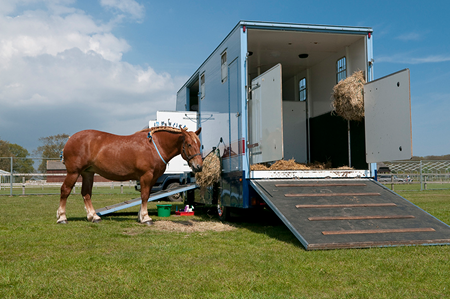
After arrival at the destination
If your horse is used to being out at pasture during the day, having spent a long time in a lorry/trailer eating only hay would count as a dietary change. Try to redress the balance by offering your horse some time hand grazing, if possible, when you arrive. Ensure there is a bucket of water nearby for them to drink out of if they want to, with a splash of their favourite flavouring and/or electrolytes.
While away at a show or competition, monitor hydration levels carefully, especially if the horses are sweating. Horses' drive to thirst is based on their blood sodium levels. If the sodium concentrations increase, thirst is triggered, which means the horse will drink and as the blood rehydrates, the levels of sodium drop again. Unhelpfully, when horses sweat, they lose both water and sodium, so the sodium concentration of the blood doesn’t drop much. As such, the thirst response isn’t always triggered, even though the horse may well be dehydrated. Adding salt or electrolytes to the feed while staying away increases the sodium concentration of the blood and can therefore encourage drinking.
Summary
In summary, supporting your horse’s health while travelling comes down to thoughtful preparation, consistency, and careful monitoring. By introducing any dietary changes gradually, encouraging hydration, and maintaining as much of the horse’s normal routine as possible, you can significantly reduce the risk of digestive upset, dehydration, and stress-related conditions such as colic or gastric ulcers. Attention to forage intake, ventilation, and regular rest breaks during travel further helps protect both gut and respiratory health. Once at your destination, continuing to prioritise hydration, fibre intake, and electrolyte balance will help your horse recover from the journey and perform at their best. Ultimately, small, proactive steps before, during, and after travel can make a substantial difference to your horse’s overall well-being.
_370.png "Sophie Pelham Burn")