










































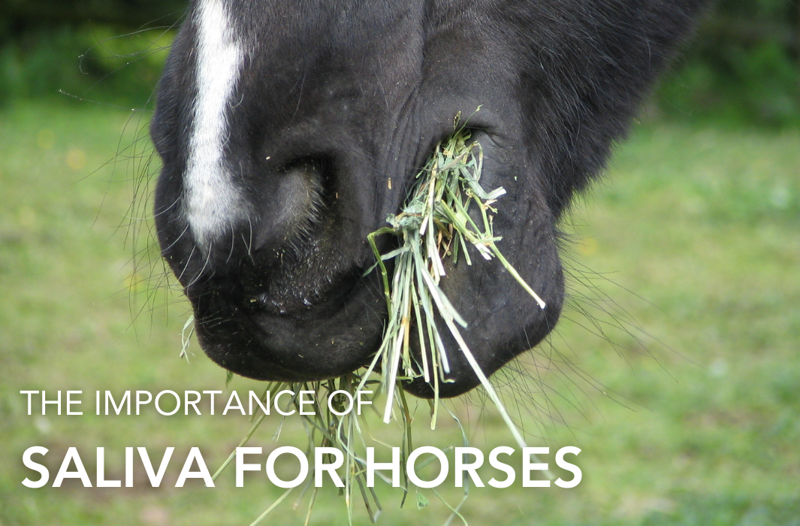
Saliva is something we don’t usually think about too much unless something is visibly wrong — or when we receive green-stained “kisses” as we bring our horses in from the field! However, saliva plays a vital role in our horses’ gastrointestinal health every time they take a mouthful of food, and changes in salivation can also give us important clues about their health and wellbeing.
If given the choice, horses will naturally spend around three-quarters of their day eating. The act of chewing stimulates the production and release of saliva from three pairs of salivary glands located around the jaw and mouth:
-
Parotid glands – located below and slightly in front of the ear, extending downwards along the line of the jaw.
-
Mandibular glands – situated along the inner edge of the lower jaw, extending from the middle towards the back of the jaw.
-
Sublingual glands – the smallest of the three, located beneath the mucous membranes of the mouth, underneath the tongue.
A 500 kg horse is capable of producing around 40 litres of saliva per day, although the amount produced varies considerably depending on the horse’s diet and how much they chew.
Research has shown that a horse eating a forage-based diet such as hay may chew around 3,000–3,500 times per kilogram of hay consumed and produce approximately 4–5 litres of saliva. In contrast, a horse eating a concentrate-based diet may chew only around 350–450 times per kilogram of feed and produce approximately 1–2 litres of saliva.
Saliva and gastric health
Although saliva is primarily water, it also contains important minerals, including sodium bicarbonate, which helps to buffer acid in the stomach.
A horse’s stomach produces acid continuously, but significant amounts of saliva are only produced while the horse is chewing. This is one reason why encouraging horses to spend plenty of time eating forage is considered an important part of supporting good gastric health.
Increasing the amount of time a horse spends chewing can therefore be a simple way of encouraging saliva production and helping to support the stomach’s natural defences.
You can extend your horse’s eating time by:
-
Feeding plenty of forage – hay, haylage and, where appropriate, straw generally take longer to consume than concentrate feeds.
-
Using a slow-feeder net or similar system – this can reduce the rate at which forage is consumed, helping it to last for longer.
-
Making the most of grazing – for good-doers whose grazing needs to be restricted, options such as strip grazing or the use of a correctly fitted grazing muzzle can help extend eating time while managing intake.
-
Adding a short-chopped fibre feed, such as chaff, to the hard feed – this can encourage additional chewing compared with feeding a concentrate alone.
Some short-chop chaffs contain alfalfa, which is naturally relatively high in calcium. Calcium, together with bicarbonate and other components of saliva, can contribute to the buffering of gastric acid.
More than just water
Unlike human saliva, which contains significant amounts of digestive enzymes, horse saliva contains relatively low levels of these enzymes. Consequently, saliva has a much smaller role in the initial enzymatic digestion of food in horses.
It does, however, contain an interesting protein called latherin. Latherin has surfactant properties, meaning that it helps liquid spread easily across surfaces. In saliva, this helps it spread over food particles, assisting lubrication as food is chewed and swallowed.
Latherin is also responsible for some of the characteristic foaming or frothing we can see around a horse’s mouth. The combination of saliva, movement and friction — for example, during ridden work when the bit and tongue stimulate salivation — can create visible foam.
A small amount of foaming during exercise is therefore not necessarily a cause for concern, on the contrary, it can be a sign of a relaxed and happy mouth. However, excessive salivation or drooling should not simply be dismissed as “the horse making a lot of foam”. It can sometimes indicate an underlying problem, such as dental discomfort or an ill-fitting or inappropriate bit.
When saliva can tell us something is wrong
Changes in salivation can have several possible causes. Excessive salivation or drooling may be associated with:
-
Dental problems or pain in the mouth
-
Certain types of poisoning, including organophosphate toxicity
-
Slaframine poisoning, sometimes associated with horses grazing red clover affected by particular fungi
-
Some bacterial or viral infections
-
Problems within the mouth or difficulty swallowing
For this reason, unexplained or excessive salivation should always be taken seriously. If your horse suddenly starts drooling excessively, develops unusual frothing, has difficulty eating or swallowing, or shows other signs of illness, veterinary advice should be sought as a matter of priority.
Conclusion
Saliva may seem like a rather unremarkable part of everyday life with horses, but it is an important component of their digestive health. Every mouthful of forage involves thousands of chewing movements and the production of saliva, helping to lubricate food and providing buffering capacity for the acidic environment of the stomach.
This is another reason why allowing horses to spend as much of the day as practical eating appropriate forage is so important. Encouraging natural, prolonged chewing not only provides behavioural and nutritional benefits, but also supports the horse’s own mechanisms for maintaining a healthy digestive system.
Saliva can also provide us with useful clues. A normal amount of foam around the mouth during exercise may simply reflect active salivation, but sudden changes in salivation, persistent drooling or difficulty eating can indicate that something is wrong.
So, the next time your horse gives you a green-stained kiss, it may be worth remembering that there is considerably more going on than meets the eye — that slightly sticky, sometimes frothy substance is playing an important role in keeping your horse healthy.
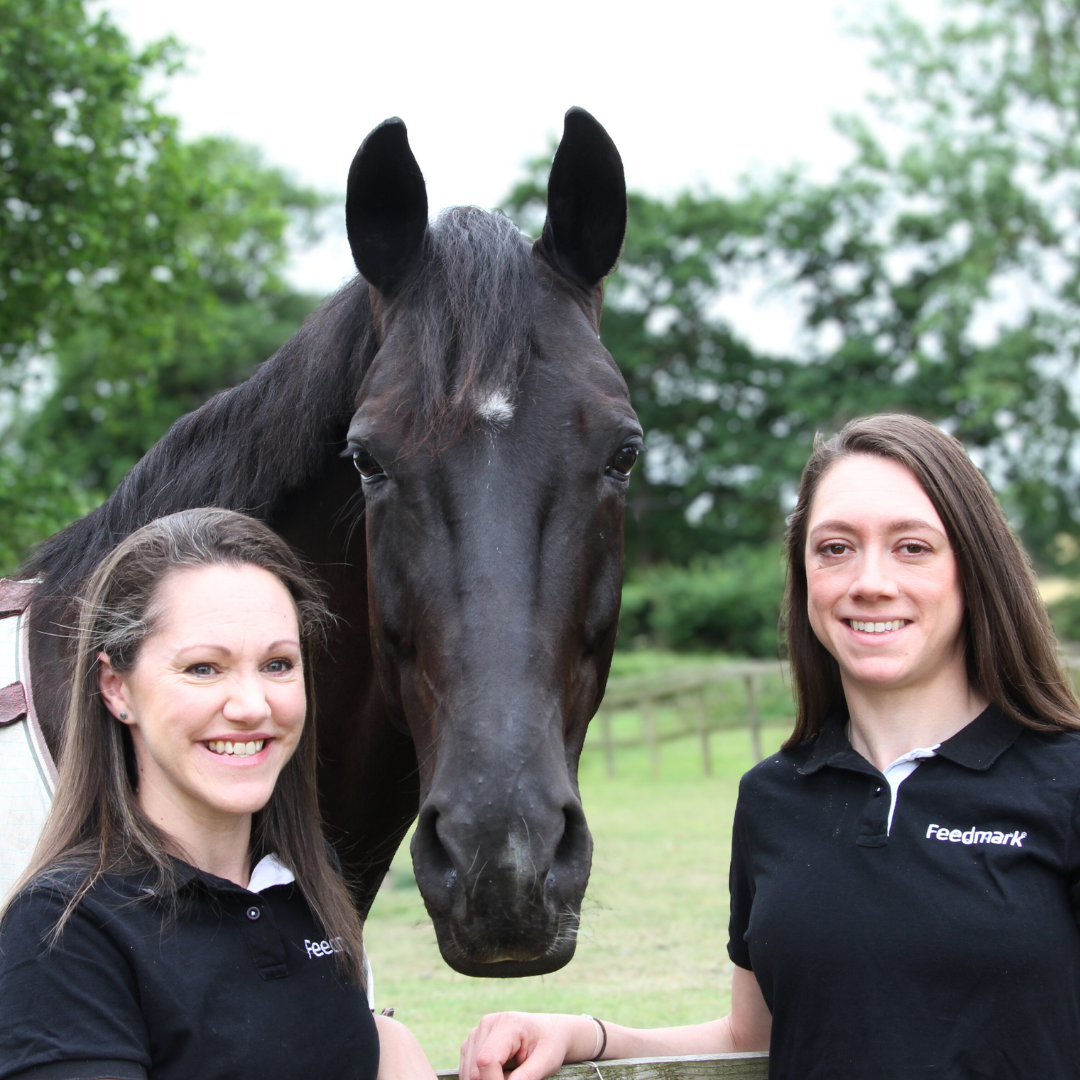
_370.png "Sophie Pelham Burn")