















































Coming up with pole work exercises can seem tiresome, so here are 4 simple exercises to make groundwork more interesting for both you and your horse. Whether your horse is in rehabilitation, in regular work or you simply want to improve the bond between you and your horse.
Why Pole work?
- Increases Joint range of motion
- Engages core – lifting the thoracic sling to encourage hindlimb engagement which improves overall muscle mass in the hind end
- Encourage symmetrical stride length and muscle mass to establish a balanced rhythm when under saddle
- Strengthen tendons and ligaments through individual limb placement
Most of these exercises should be done at walk, to minimise the stress applied to the joints. Poles should be placed on a soft surface to avoid concussion on the joints. This can also be done, in hand or long reined
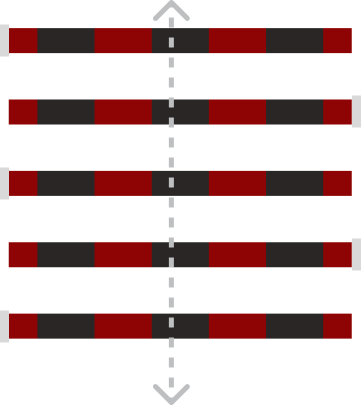
Exercise 1: Poles in a Straight Line
For this exercise, lay out 6 poles 4ft apart (Although this should be altered depending on the size of your horse!). Walk your horse down the centre of the poles. Be sure to encourage a forward walk whilst avoiding rushing, a neutral head and neck position, and clearing each pole. You can approach them from both directions on each rein. If poles are consistently clipped, distances between the poles can be changed to suit your horse.
How can I progress this?
Poles can be raised alternately at the same distance as before; this will encourage increased joint ROM and encourage further core activation. As a result, the hind end will come into play, lifting your horse off the forehand; improving HL muscle mass, rhythm and balance.
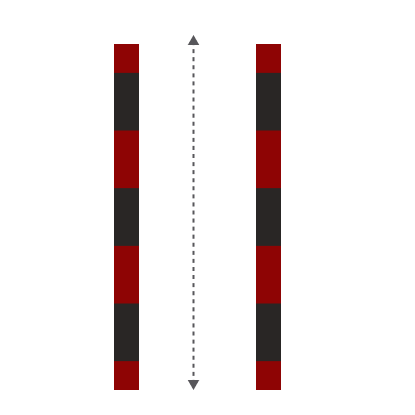
Exercise 2: Backing Up
For this second exercise, place two poles on the ground, parallel to each other with enough space for your horse to walk comfortably between them.
Walk your horse straight through the poles, when you reach the end, ask your horse to back up while staying in between the poles, while keeping the movement slow and controlled
Why? What is the benefit?
- Mobilising the sacroiliac joint (SI)
- Lift through the thoracic sling and encourage hindlimb engagement
- Promotes better flexion of the hindlimb joints
- Improves coordination and proprioception
A good back up is when your horse moves in diagonal pairs
How can I Progress this?
Add two more poles horizontally to your original poles, creating a corner channel for your horse to move through. You can start with a wider corner and decrease the angle as you go until the corner is at a 90° angle.
Why progress in this way?
Hindlimb muscles (gluteal and quadriceps) will strengthen by encouraging the inside leg to take more weight which further improves balance, coordination and control.
Exercise 3: Fan
The fan is a brilliant exercise for weight distribution and encourages lateral bending. Not only does the fan activate the core, but the inside limb takes more load stimulating Hind Limb muscles, whereas the outside limb takes a longer stride. Vary the size of your circles; smaller circles encourage shorter strides, while larger circles encourage longer strides. Working on both reins will improve your horse’s ability to adapt their stride length and develop even muscle mass through the hindquarters.
How can I progress this?
Raise the inside of the fan, this will increase joint ROM

Exercise 4: Labrinth
Set up six poles in a labyrinth. Imagine two ‘U’ shapes facing opposite directions. Lead your horse slowly through the maze, following the path between the poles. Allow your horse to bend through each turn while maintaining a steady controlled pace.
Why do this exercise?
- Encourages lateral bending and spinal flexibility
- Promotes even weight shifting as your horse changes direction, helping develop balanced muscle mass on both sides of the body
- Encourages your horse to step underneath with the hind legs and improve hindlimb engagement
- Improves coordination, balance and proprioception
Ensure the labyrinth is walked both directions to enable equal bending promoting symmetrical muscle development

Why Is improving joint ROM important?
- Aid relaxation
- Prevent tissue adaptive shortening
- Maintain mobility and reduce stiffness
- Encourage circulation
- Improve synovial fluid production
- Slow down the onset of degenerative diseases like osteoarthritis
In Conclusion
These selections of pole exercises provide interesting yet beneficial to your horse, each targeting different aspects to improve your horse’s overall strength and therefore improve your ridden work. It is amazing, that even in walk exercises can significantly better not only your horse’s performance but overall health. Maintaining joint range of motion will slow down degenerative diseases like osteoarthritis and improve mobility old and young horses.