







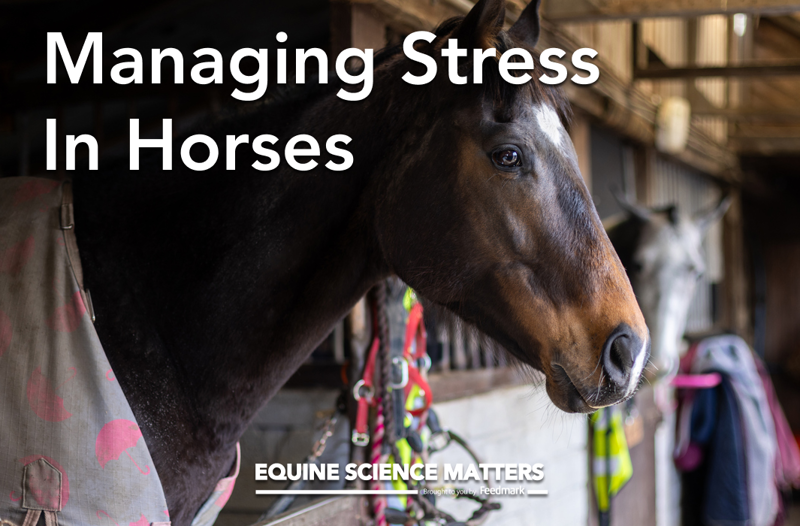
As a prey animal, horses have highly evolved mechanisms to detect and respond to perceived threats and challenges in their environment.
Around 55 million years ago, small forest-dwelling animals called Eohippus lived in North America. It is from these early origins that horses evolved to the animals we know and love today. The first evidence of domesticated horses dates from around 5,500 years ago, with selective breeding and domestication shaping their behaviour, appearance and relationships with humans.
Given that over a period of 55 million years horses have been domesticated for approximately 1% of that time, it’s easy to see how their adapted stress responses and associated physiology might not have yet altered sufficiently to cope with the demands of modern life.
Despite their evolution as a prey animal with a natural instinct to flee from threats, many horses adapt well to their surroundings. As they learn that something they were stressed by is not actually threatening, their stress response will often diminish or no longer occur at all in response to that stimulus. However, just as humans all have their individual personalities, so do our horses, and some will always find a situation more stressful than others. Travel, competition, controlled meal feeding, pain (which is often masked) and individual stabling and turnout are all factors that can play into a stress response, even in the absence of an obvious spooky or scary event.
Chronic stress in horses
Increased heart rate, breathing rate, decreased appetite, flightiness, stereotypical and undesirable behaviours, depression, reluctance to work, and poor performance and recovery can all be signs of stress over the short- and long-term.
Cortisol and adrenalin are two of the main hormones that increase in response to a stressful situation, with cortisol being the marker most often used in research settings. As levels of these two hormones rise, often in a matter of seconds, metabolism changes:
-
Glucose is released from the liver and blood glucose rises, while insulin sensitivity decreases so it’s movement into muscle cells is impaired.
-
The rate of fat breakdown and metabolism within the muscles increases.
-
Carbohydrate breakdown, stored in the muscle as glycogen, releases glucose into the muscle.
Together, these metabolic changes allow increased fuel availability to the muscle in case the horse needs to flee from the threat, and allows a high level of glucose for the brain to respond behaviourally.
During a stress response or strenuous exercise, when both of these hormone levels rise, there are also other physiological effects beyond those that affect the metabolism. Blood flow to the gastro-intestinal tract decreases (to redirect blood to the muscles), the immune system is suppressed, muscle protein synthesis decreases, and inflammatory markers rise, to name just a few.
While these adaptations are, from an evolutionary perspective, very clever and highly appropriate for a prey animal who needs to survive a brief “fight-or-flight” situation, long-term activation of these pathways can contribute to a number of issues including:
-
Increased susceptibility to gastric ulcers
-
Disrupted gut microbiota
-
Poor exercise performance and recovery
-
Delayed wound healing
-
Increased vulnerability to infections
-
Altered metabolism and insulin resistance
-
Weight loss
-
Impaired learning and focus
-
Stereotypical behaviours
-
Increases in undesirable behaviours
Management strategies to reduce stress
For horses who are displaying signs of chronic stress, management strategies should be adapted around the three key principles of Friends, Forage and Freedom.
-
Friends
As horses are prey animals who have evolved to live in herds, spending time in social groups helps lower stress levels through reducing individual hyper-vigilance to their surroundings. Additionally, horses that live in social groups will seek out a friend and engage in mutual grooming behaviours following a stressful event. Research has shown that mutual grooming for as little as 15 minutes per day is sufficient to demonstrably reduce stress levels. Where this isn’t possible, making sure to stable or turn horses out where they can see others can be beneficial.
-
Forage
A horse’s stomach produces acid continuously. When a horse chews, this stimulates the production of saliva which buffers that stomach acid and plays a huge role in gastric health. Ensuring a horse has access to forage for as much time in any 24 hour period as possible, adapting the type of forage and energy density to ensure they maintain an appropriate weight is key for gastric health, but also provides mental stimulation and reduces stress around feeding times. Providing opportunities for environmental enrichment by allowing the horse to exhibit natural foraging behaviours can also be beneficial. Using different types of hay feeders, incorporating herbs in forage (check with governing bodies regarding Clean Sport rules if competing), and using feeder puzzles can be good options depending on your horse’s temperament and nutritional requirements.
Adequate forage provision is also instrumental in supporting a healthy hindgut and microbiota, and there is an increasing amount of research linking behaviour and stress responses to gut health. More information about the gut : brain axis can be found here.
-
Freedom
Throughout their long history, horses have evolved to roam long distances in search of food and water. While this isn’t possible, or even sometimes appropriate, for many horses in today’s management systems, providing opportunity for unstructured movement is a key factor in both mental and physical wellbeing of our horses. As well as freedom of movement, freedom of choice can be helpful in reducing a horse’s overall stress levels. Having the space to choose whether to be with others or move away slightly, seek shelter or stay out, which surfaces to stand or even roll on, etc. can all contribute to lowering stress levels.
Dietary strategies for stress management
Given the links between the gut, microbiota and brain, it is no surprise that what we feed can play into behaviour and stress management.
High starch diets have been demonstrated to alter the pH of the hind gut, and can lead to increased intestinal permeability or “leaky gut”, which means the gut lining is less effective at regulating what does and doesn’t get absorbed through the gut wall. This is linked to slightly higher, albeit still subclinical, levels of systemic inflammation. In humans, the increased inflammatory signalling associated with gut lining damage has been linked to reduced motivation, reward processing and an altered response to stress, although while there is increasing research in this area in horses, it is so far in it’s infancy. Several equine studies have also linked high starch diets to behavioural reactivity and tension, and higher heartrates in response to new situations, and while these studies did look at gut microbiota changes, they didn’t look at inflammatory markers.
Magnesium supplementation is often mentioned in any conversation about dietary strategies to help stressed or anxious horses, due to its role in regulating neural excitability. While there is a strong theoretical link, the research is mixed. The likelihood is that in horses who have a magnesium deficiency there could be a benefit, although there is no reliable method to test for total body magnesium status in a horse. Blood levels are always tightly regulated, even when magnesium status elsewhere is declining, so a normal result on a blood test doesn’t always mean the horse is meeting it’s requirements through dietary sources.
Overall, when it comes to dietary strategies for anxious horses the priority is ensuring a balanced, gut healthy diet with targeted supplementation if required.
-
Ensure the horse’s forage needs are met:
-
Regular access to forage and foraging behaviours
-
Appropriate energy intake, using lower energy forages for good doers
-
Reduce the sugar and starch content of the diet
-
For poor doers increase the forage and fibre intake as high as the horse will eat
-
Look for feeds that provide energy from fibre and oils
-
Consider the total diet, including starch and sugar provided by forage, bucket feeds, treats and licks.
-
Ensure the diet is balanced for vitamins and minerals including adequate levels of magnesium.
-
Consider a supplement that contains magnesium along with herbal ingredients to provide a multi-faceted approach.
-
If behaviour changes suddenly, seems out of character, or could potentially be related to pain or illness veterinary advice should be sought.
Conclusion
Managing stress in horses starts with understanding their individual needs and creating an environment that supports their natural behaviours as far as possible. Providing Friends, Forage and Freedom can help reduce avoidable stress, while a balanced, forage-based diet supports digestive health and overall wellbeing.
Although research into the gut–brain axis and the role of nutrition in equine behaviour is promising, much remains to be understood. Reducing unnecessary starch and sugar, ensuring adequate vitamin and mineral intake, and considering targeted supplementation where appropriate can all form part of a balanced approach.
Ultimately, there is no single solution to stress. By looking at the whole horse and addressing its individual needs, we can help support better health, wellbeing and more regulated behaviour.
_370.png "Sophie Pelham Burn")