



_800.png "Groundwork ideas for when it’s too wet to ride | Equine Science Matters™")
There is a saying that you can either have beautiful green pastures or horses, but not both at the same time. With the seemingly unrelenting rain we’ve had so far this winter, that phrase seems a little too true for many of us at the moment. When it’s too wet to get out, or the ground is too waterlogged to ride safely, there is still a lot we can do with our horses, either as groundwork or even in the stable or barn. Spending time on the ground is valuable from a training perspective, but it’s also very helpful from a health and care point of view. The more time we spend with our horses, watching how they move, their individual little quirks and behaviours, and grooming or massaging them, the better chance we have of noticing when there are any unusual lumps, bumps or changes in behaviour. Picking up on any chances or potential issues early is often key to successful outcomes (and lower vet bills) and, of course, better for horse welfare.
Grooming
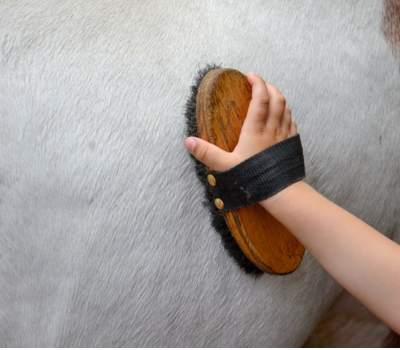
Giving horses a thorough brushing all over might seem ridiculously simple, especially when your horse is rugged and clean, but it helps stimulate blood flow to the skin and gives the perfect opportunity to check for any little nicks or scratches, heat or swelling.
When we think of organs, we usually think of the lungs or liver as the biggest, but the skin is also one of the largest organs the horse has. It plays a vital role in maintaining overall health and is quite literally the first line of defence against a multitude of bacteria and viruses, so keeping the skin and coat healthy and functioning well is much more important than just vanity. As well as the liver, kidneys and lungs, the skin plays a vital role in detoxification pathways. It has a vast network of blood vessels, and in cooler weather or when the horse is stationary for long periods, such as when stabled, blood flow through the capillaries at the surface reduces. A good, thorough brushing with bristles suited to your horse’s coat length is a great way to stimulate blood flow, bringing with it nutrients and oxygen, and removing any metabolic waste.
Massage
Similar to grooming, massage gives a good opportunity to check the horse thoroughly, improve blood flow, and also relieve any muscular tension. Improved lymphatic drainage, improved range of motion with relaxed muscles, and, of course, all-important bonding time are some of the other benefits of massage. There are several online video tutorials from reputable vet physios you could follow, or perhaps ask your physio to show you some techniques you can use on your horse’s problem areas to keep them more comfortable between visits.
Stretching
A good, regular stretching routine is a great way to help keep horses flexible and supple, especially during times when they may be stabled for longer. Stretching also helps improve blood flow to joints, and movement of certain nutrients into cartilage, synovial fluid, tendons and ligaments, helping to maintain and support the health of these vital tissues. Improving flexibility is key to ensuring your horse remains comfortable, and also reduces the risk of injury when you do manage to get out to ride, or even just when they’re turned out and showing the world their heels! Muscle Treats are a great post-exercise stretching aid, while Herbalicious are a lovely, tasty alternative when they’ve been at rest.
.png)
Liberty Training
Starting liberty training in the stable might not feel like much, but teaching the horse to move through body language and treating liberty training as a conversation between you and your horse is a great foundation. Whether you want to continue this type of work with your horse in a larger space later on or not, teaching some liberty cues while we’re quite literally rained in can be really helpful once we’re able to get back to riding.
Moving hind quarters or the forehand on cue can be really helpful for teaching horses to line up to a mounting block, a gate, or anything else if we find we need to get back on when we’re out and about.
If you do decide to take it further and use liberty principles when loose schooling in an area or round pen, it can be really helpful to watch and understand how your horse moves without any tack or equipment. Observing how your horse moves from this perspective, even without doing any jumping or pole work, effectively gives you an instructor's view and can help identify any areas to work on when you’re riding again. Taking note of how different muscles move on each rein, any stiffness, which exercises they’re more or less willing to do without rider influence, etc, can all help build a picture to inform ridden work later on.
Groundwork
Just because ridden work has stopped, it does not mean that progress has to stop too. Using this time to work with your horse on the ground can often allow them to develop their minds and bodies further than if they were ridden, through exercises such a groundwork patterns, in-hand hacking, walk poles, and long-lining. More ideas can be found HERE or on our Instagram post with Sponsored Rider and Vet Physio Issy Brine (@feedmark_).
Summary
While it might be frustrating to lose so much time in the saddle to mud and rain, it can still be viewed as a positive. By encouraging us to find different ways of working and bonding with our horses, we can deepen our understanding of them as individuals and see new perspectives and training directions we may not have otherwise noticed. Extra time grooming, massaging, stretching, learning new skills from the ground and loose schooling can all contribute to improved overall health and wellbeing.
_370.png "Sophie Pelham Burn")