













































When it comes to winter, our horses' routines can change quite a lot, and with that, one of the main things that changes is their diet. Many people will always start to give a hard or concentrated feed as the weather cools, or the horse is stabled a little more of the time and not getting as much energy from grazing. For poor doers, elderly horses or those who tend to drop weight in the winter, that’s often a really good idea. However, it’s not uncommon for people to start giving a hard feed almost out of habit rather than need, or because they want to provide extra nutrients.
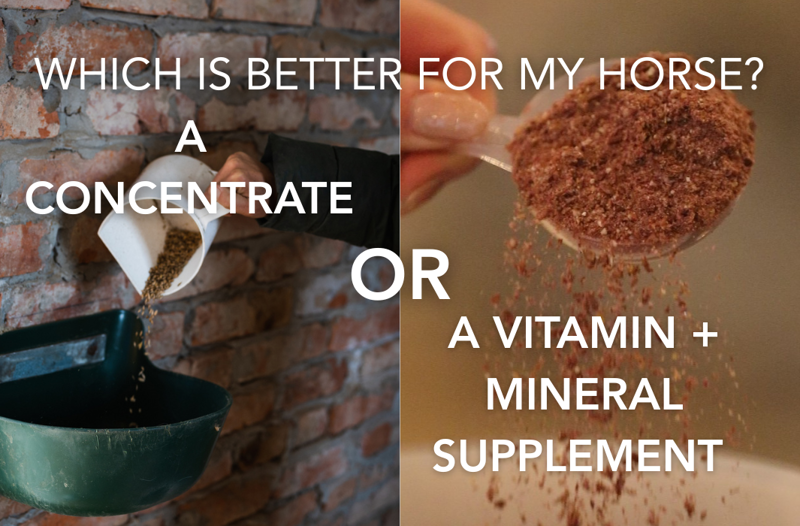
For horses who are maintaining their weight well, or are a little overweight and could use the winter to drop a few kilos, feeding half a scoop or so of hard feed per day isn’t going to contribute anything meaningful to the diet, other than calories that may not be needed. Concentrate feeds that provide vitamins and minerals are designed to be fed to a certain level, and won’t adequately balance the levels in forage when fed below that. UK forage, which includes grass, hay, haylage and non-fortified forage replacers such as grass chop, doesn’t contain the full range of vitamins and minerals that our horses need to thrive, so they must obtain these through other aspects of the diet. Instead of giving a hard feed below recommended quantities, it would provide better nutrition to give a balancer or vitamin and mineral supplement instead.
Powdered vitamins and mineral supplements contribute a negligible amount of calories to the diet, and can be mixed into a soaked feed such as sugar beet. The advantage of such feeds is that a very small quantity soaks into a much larger volume while still providing minimal calories, so they provide an ideal carrier for appropriate supplements. As a vitamin and mineral supplement that won’t contribute any meaningful amount of calories, it can be safely fed at the appropriate daily rate without any risk of weight gain, ensuring your horse will receive the correct nutrition all year round. Many of these types of supplements contain a small amount of linseed or some other source of oils. These are included to help absorption of the fat-soluble vitamins, which need to be digested alongside a fat source in order to be absorbed across the intestinal cell wall. Although this fat source needs to be included for absorption reasons, it is at such a low level that the calories provided are still negligible in the context of the whole diet, so it is still a suitable option for good doers.
Having the vitamins and minerals from a separate source from the calories in the bowl also gives greater flexibility and continuity. The same feed can be given year-round, with the quantity increased or decreased in response to the horse’s workload or changes in body condition, while ensuring a consistent level of vitamins and minerals is provided. Essentially, having the source of energy in the bowl separate from the vitamins and minerals allows us to be more responsive to the individual horse’s needs without having to change feeds and get the horse’s gastrointestinal system used to a new feed.
To summarise, it’s important to provide a diet that is balanced in vitamins and minerals all year round. Often in winter, horses are fed a concentrate feed well below the recommended feeding rate with this in mind. However, as this will not provide enough micronutrients to balance the forage component of the diet adequately, it would be better to provide a vitamin and mineral supplement or balancer mixed into a suitable low-calorie carrier feed instead.
_370.png "Sophie Pelham Burn")